Our online store is not yet available, but all features will be launching soon. Thank you for your patience and subscribe to our newsletter if you want to stay in loop.


Natural New Zealand Health & Vitality

Over the past 30–40 years, deer velvet has been the subject of extensive scientific investigation—initially in Asia and increasingly in Western countries, including New Zealand. Published studies have primarily focused on its biochemical composition, nutritional profile, and safety of use within dietary supplements.
Research has particularly examined the natural composition of velvet antler and its potential role in human nutrition, including areas related to physiological balance, vitality, and adaptation to physical and mental demands.
The most comprehensive studies on the composition and biological characteristics of velvet antler in New Zealand have been conducted by AgResearch, including work led by Dr. S. R. Haines.
AgResearch is a government-owned research institute specializing in biological sciences and agriculture. It was established in 1992 through the merger of research divisions from the Ministry of Agriculture and Fisheries and the Ministry of Research, Science and Technology. Today, AgResearch operates across several major campuses throughout New Zealand and contributes to research in agriculture, food systems, and natural raw materials.
Research on deer velvet is also carried out under the VARNZ (Velvet Antler Research New Zealand) initiative, a joint venture between Deer Industry New Zealand (DINZ) and AgResearch Ltd., established in 1994. Its primary mission is to:

AgResearch and its predecessor organizations have been studying velvet antler since 1976, while DINZ has commissioned formal research programs since the early 1990s. VARNZ continues to build upon and expand this long-standing scientific tradition.
New Zealand and international studies focus on the following areas of scientific investigation:
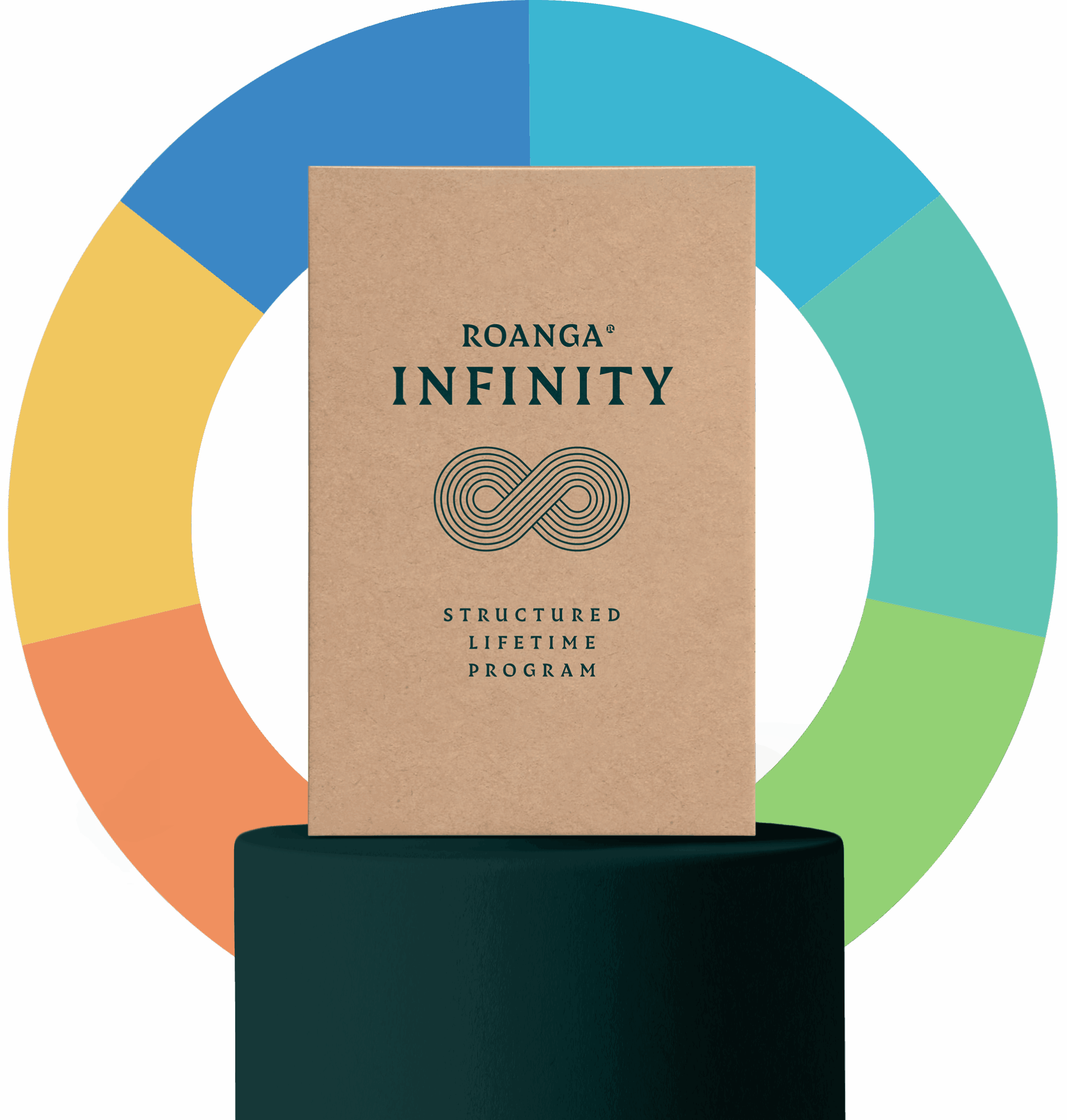




By integrating its principles into real-life conditions, Roanga® Infinity supports a lifestyle that is sustainable, adaptable, and realistic, even in the context of modern demands and responsibilities.


Through this systemic approach, the body can achieve deeper internal stability, which is essential for lifetime vitality, resilience, and naturally sustained energy.
This approach supports deeper physiological change and enables the body to restore balance through natural mechanisms, rather than relying on short-term or isolated solutions.
The program works exclusively with ingredients whose origin is transparent and whose processing meets high ethical and quality standards. This approach ensures that what the body receives aligns with its natural needs, while honoring a responsible relationship with the environment.
Nature brings complexity and bioactive richness. Science brings precision, validation, and consistency. Together, they form a system designed not for quick fixes, but for sustained, lifetime support.
This approach is deeply rooted in the Māori philosophy of Te Whare Tapa Whā, where health is understood as the unity of body, mind, spirit, and relationships.
When one pillar weakens, the entire structure loses stability. When all are supported, mauri — life force — can flow freely.